As the director, I had to answer one main question: How do we create something that scratches the same itch as table top RPGs on a mobile platform? The developers and CEO were trying to figure that out when it came to the app itself, but I had to find the answer for the creative side of the project. To do so, I had to address 4 major problems.
THE WORLD
I researched more than a dozen RPGs and many campaign setting and adventure modules to make sure I understood the worldbuilding. I’ve been a game master for years, so I was familiar with a lot of them, but this task required a much deeper understanding of the genre. I also had the 5th edition content that had to be adapted, which was both a blessing and a curse. On one hand we had a large database of already established, familiar content we could use. On the other, we had to fit all of it into a believable world, limiting our creativity and massively expanding our scope.
In the end, I knew I just had to commit. There was no easy solution to this problem – I simply had to put my head down and create a world housing everything an RPG player would expect. We decided to cut all of it into manageable chunks instead of one massive release and got to work, described further in Narrative Design and Worldbuilding.
THE GAMEPLAY
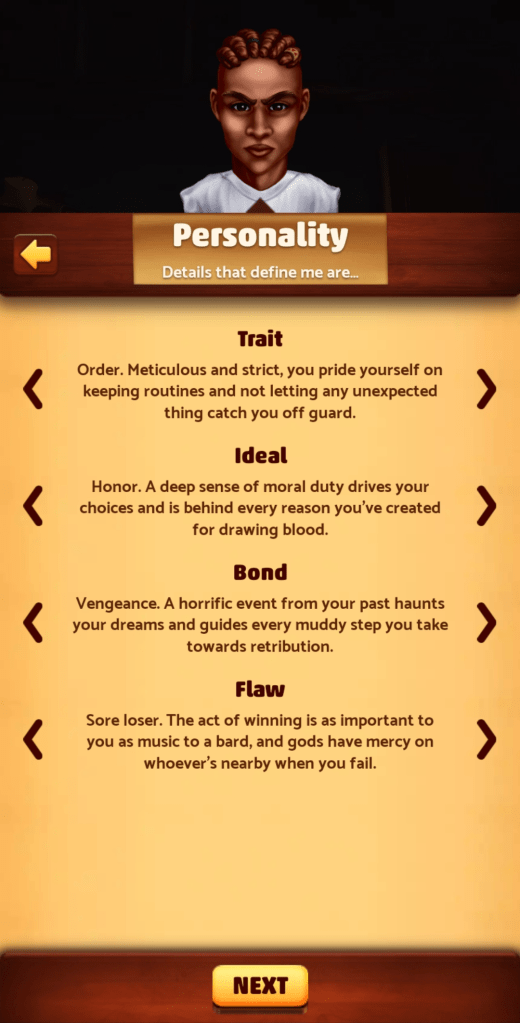
The gameplay of Dungeon Realms was another major factor. I knew the play-by-post hybrid between a table top game and a video game would need very specific content to support it. Some aspects of it were already set in stone by the CEO – monsters and NPCs would have minis that would appear on a map, players would customize their characters and the app would make gameplay smooth by automating rules and giving GMs and players access to premade messages. The content had to use and elevate these mechanics.
I approached the gameplay as a mix of classic TTRPGs, choose your own adventure books, and narrative heavy video games. The content needed to provide assistance and immersion, gently guiding the GM and players forward using the tools we had. The goal was for the players to feel like they are having a familiar TTRPG experience while being kept in check by subtle limitations. The content aimed at GMs had to give them as much assistance as possible so they could create any game they wanted without feeling either too limited or completely on their own.

THE RULES
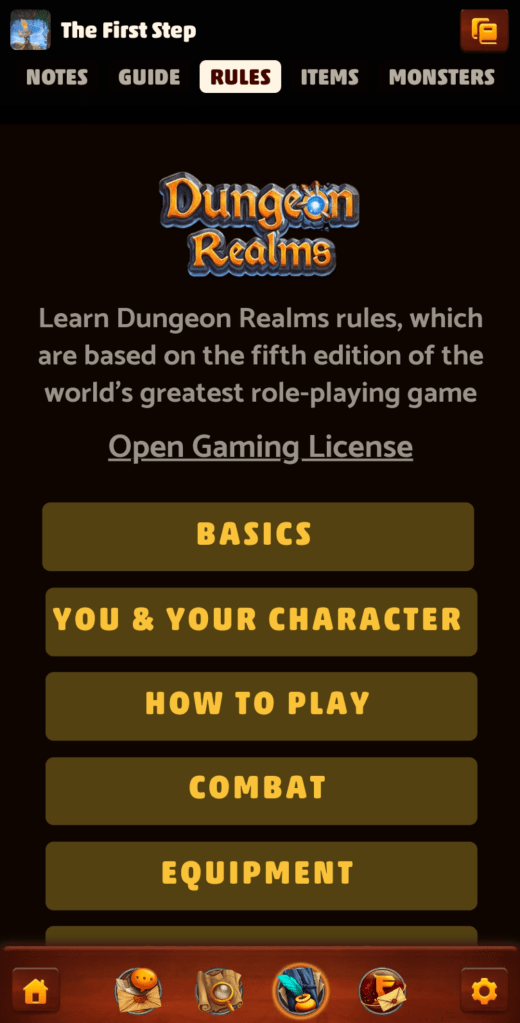
Like the content available under the creative license, having access to the the 5th edition D&D ruleset was a double-edged blade. Having access to the rules was a massive boost, but it also came with a lot of baggage. How could we make sure people can have similar experience to what the ruleset promises on a very different, much more limited platform?
I ended up breaking down the entire ruleset together with the developers to figure out how exactly it was going to be implemented and how to use it. While the devs worked on the backend, my plan was to roll out content according to their progress. If the app didn’t support battle maps, we planned content so we didn’t need to include them, but could add them later. This approach led to fully playable experiences early without the need to have the entire ruleset available. It required lots of communication and hard work from both the developers and the content team, but it was definitely worth it.

THE BUSINESS MODEL
The last major challenge was the business model. Dungeon Realms was set to be a live service that continues to grow and allows players to make their own content. This model meant we had to start delivering content fast and in smaller chunks that would support a live service pipeline and release schedule instead of the usual massive RPG release.
I viewed the model as a benefit. Live digital platforms have a massive advantage over other media because they allow for very quick prototyping and releases, leading to better engagement with the community. Instead of creating huge content packs, we separated pretty much everything into smaller sections that could be produced within a few months and we focused on giving every piece of content a strong individual identity. Everything needed to justify it’s existence in the pipeline and the constraints helped us cut out lots of bloat.
SUMMARY
After I faced these main issues and a bunch of smaller ones, I decided on the direction. I knew we were creating a familiar, massive fantasy world that would lead both GMs and players to guided interactive stories. The world would be split into smaller chunks ranging from big regions to items and monsters that would be released over time according to the available rules. The game would emphasize immersion and the feeling of playing an RPG, subtly guiding the GMs and players towards new adventures without getting frustrated. Once the GMs would be familiar enough with the platform, they would be onboarded to create their own stories.
I directed the team with as much confidence as I could. Believing in myself was the key to pulling everything off. I didn’t use any fancy tricks or techniques – I instead always relied on the basics. Good documentation, organization, communication, work ethic, and empathy. Once I established those, I let the creativity in myself and my team take over, always trying to learn from my mistakes in the process.
The vision was delivered in 2022. We created a tutorial adventure that shows the players the basics and 5 more adventures to play. The world of the Charred Shores was revealed starting with two regions (Cradle Island and Fairfax) populated with monsters and NPCs. We had much more content in progress which was unfortunately never released, but I’m very proud that I delivered the vision in it’s full form.
 TOM GESTINGER